
Precision Emissions Control for Chemical and Petrochemical Facilities
Market Overview
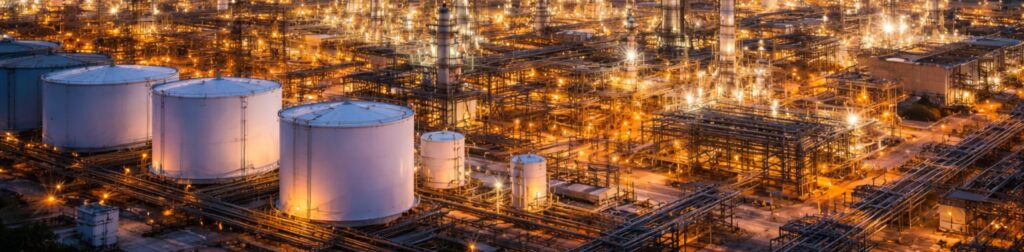
Chemical processing and petrochemical facilities are among the most complex operating environments for emissions control. These facilities host a diverse array of combustion sources — fired heaters, process boilers, turbine drivers, and thermal oxidizers — operating under demanding process conditions and subject to some of the most comprehensive air permitting requirements in the industrial sector.
NOx control at chemical processing facilities must account for regulatory compliance, process integration constraints, safety requirements, and the need for system designs that can accommodate variable operating conditions without catalyst damage.
The NOx Challenge
Chemical plant combustion sources often operate on complex fuel compositions — refinery gas, hydrogen-enriched streams, and mixed fuel systems — that significantly affect NOx formation rates and exhaust conditions. Fired heaters operate across a wide range of process temperatures and duty cycles, creating variable flue gas conditions that must be carefully characterized to ensure SCR or SNCR system performance. Catalyst selection is especially critical in chemical processing, where trace sulfur compounds, heavy metals, and other process-derived contaminants in the exhaust stream can reduce catalyst life if not properly addressed in the system design.
Target Equipment
- Process fired heaters (convection and radiant section configurations)
- Reformer furnaces and cracking heaters
- Process steam generators and package boilers
- Gas turbine compressor and generator drives
- Thermal oxidizers and incinerators for waste gas destruction
- Flares and enclosed ground flares
- Emergency and standby generator sets
Regulatory Landscape
| Regulation / Program | Relevance to NOx Control |
|---|---|
| 40 CFR Part 63 Subpart UUU | NESHAP for petroleum refineries — includes requirements for process heaters and boilers at refinery facilities |
| EPA NSPS Ja | Standards for petroleum refinery process heaters — applies to new and modified units above threshold heat input capacities |
| NSPS KKKK / JJJJ | NOx standards for new stationary gas turbines and reciprocating engines at chemical and petrochemical facilities |
| BACT / LAER Requirements | New and modified sources at major chemical facilities must demonstrate best available or lowest achievable emission rate technology for NOx |
| State & Regional Rules | State implementation plan rules and regional air district regulations impose facility-specific NOx limits enforced through Title V operating permits |
How EcoCAT Systems Help
EcoCAT Systems brings the engineering depth needed to navigate the complexities of chemical processing emissions control projects. Our in-house team performs detailed exhaust gas characterization, catalyst compatibility evaluation, and system integration analysis to design SCR and SNCR systems that perform reliably in demanding chemical plant environments.
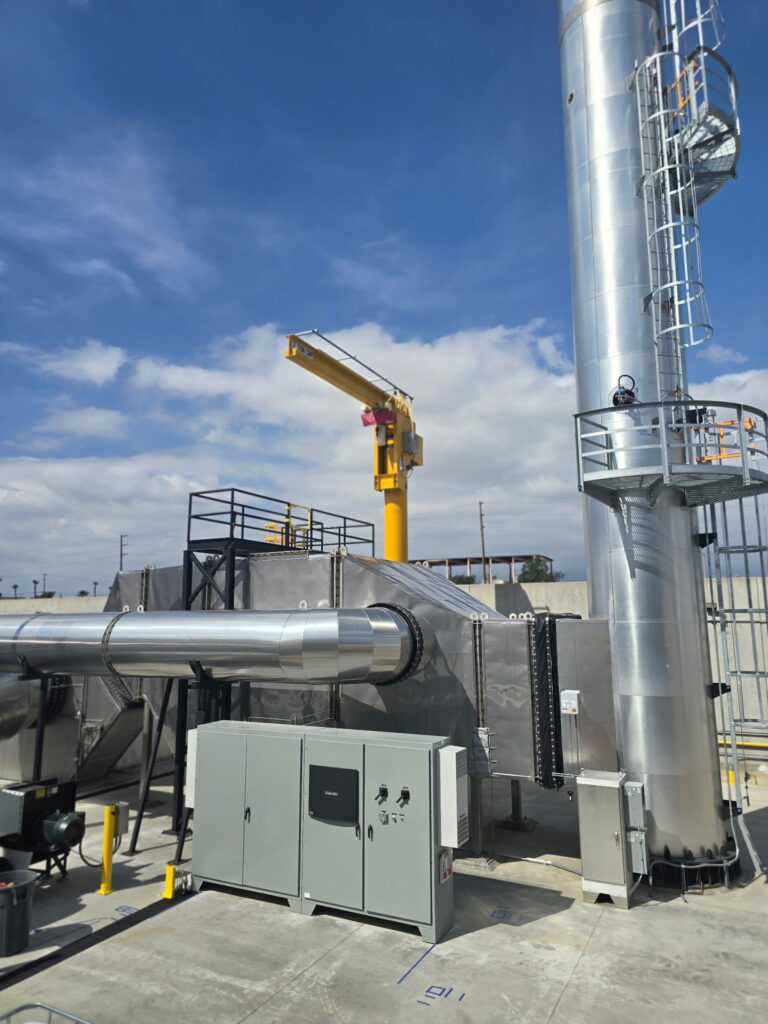
Our experience with thermal oxidizers, afterburners, and fired process heater applications — combined with our full portfolio of ductwork, damper, and stack components — makes EcoCAT a capable single-source partner for complex chemical facility emissions projects.
Ready to Optimize your Operations?
Message our Experts