
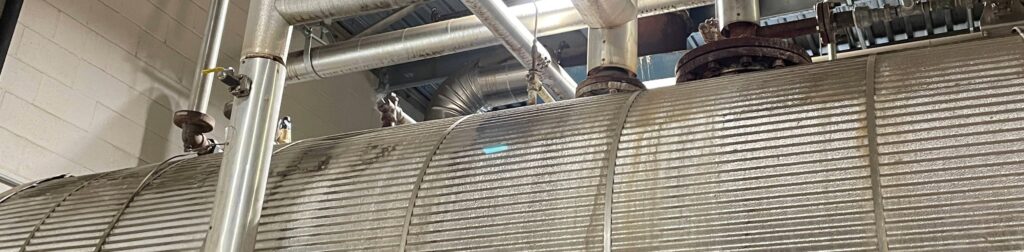
Proven NOx Control Solutions for Natural Gas and Diesel Reciprocating Engines
Equipment Profile
Stationary reciprocating internal combustion engines (RICEs) are used extensively across oil and gas production and compression, power generation, cogeneration, and emergency standby applications.
Engine types include four-stroke lean-burn (FSLB) natural gas engines, two-stroke lean-burn (TSLB) compressor engines, rich-burn natural gas engines with three-way catalyst control, and compression-ignition diesel engines. Each type presents distinct NOx emission characteristics and exhaust conditions that drive the SCR system design.
NOx Formation in Reciprocating Engines
Lean-burn reciprocating engines — particularly the large FSLB and TSLB units common in gas compression and power generation — are among the highest-NOx stationary sources on a per-unit basis. Baseline NOx levels from TSLB compressor engines can range from 1,500 to over 3,000 ppmvd at 15% O2, requiring SCR systems capable of 90% or greater NOx reduction efficiency to meet modern permit limits.
Engine exhaust temperatures — typically 600°F to 900°F — vary with engine load, ambient conditions, and fuel composition. This creates challenges for catalyst activation during cold start and low-load operation, and requires careful catalyst selection and system design to maintain performance across the operating envelope.
EcoCAT System Design Approach
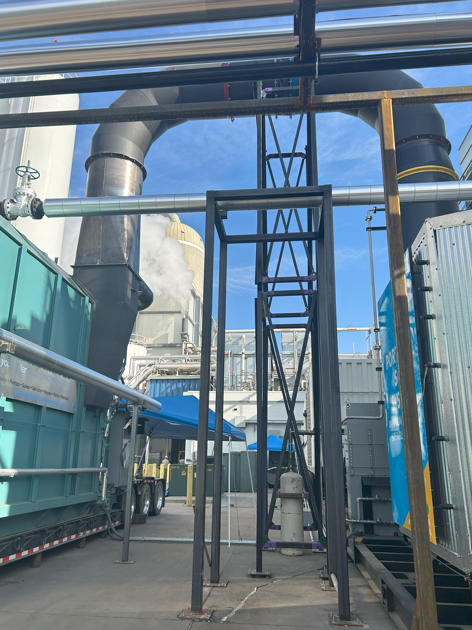
- Exhaust flow and temperature characterization across the full engine load range, including startup and low-load conditions
- Catalyst formulation and volume selection matched to the engine exhaust temperature profile and target NOx reduction
- AIG design for effective reagent mixing with pulsating, variable-flow engine exhaust streams
- Reagent system design for aqueous or anhydrous ammonia, or urea-based AFCU systems
- Oxidation catalyst integration for CO and VOC control where permit conditions require
- Multi-engine installations with centralized or distributed reagent supply system configurations
- Exhaust flow and temperature characterization across the full engine load range, including startup and low-load conditions
- Catalyst formulation and volume selection matched to the engine exhaust temperature profile and target NOx reduction
- AIG design for effective reagent mixing with pulsating, variable-flow engine exhaust streams
- Reagent system design for aqueous or anhydrous ammonia, or urea-based AFCU systems
- Oxidation catalyst integration for CO and VOC control where permit conditions require
- Multi-engine installations with centralized or distributed reagent supply system configurations
SNCR as an Alternative
For certain reciprocating engine applications where exhaust temperatures are favorable and moderate NOx reduction levels are acceptable, SNCR may be evaluated as a lower-capital-cost alternative to SCR. EcoCAT provides both SCR and SNCR system design and can assist in evaluating the appropriate technology for specific permit and operational requirements.
Retrofit Experience
A substantial portion of the installed reciprocating engine base was placed in service before modern NOx standards were adopted. EcoCAT has experience engineering emissions control retrofits for existing engine installations — including space-constrained exhaust configurations, multi-engine manifold systems, and integration with legacy engine control infrastructure.
Ready to Optimize your Operations?
Message our Experts