
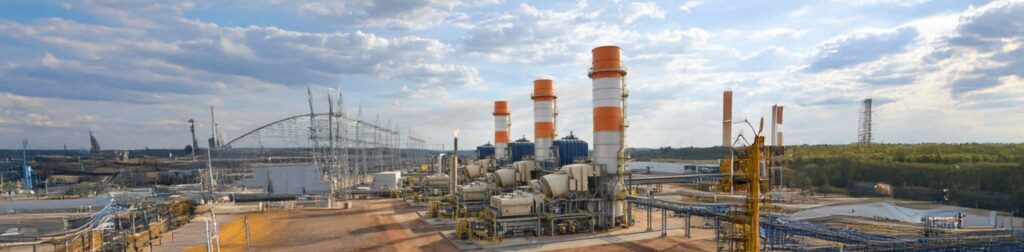
SCR Solutions for Fired Process Heaters in Refining and Chemical Service
Equipment Profile
Fired process heaters and furnaces are critical assets in petroleum refining, petrochemical processing, and chemical manufacturing — providing high-temperature heat for distillation, cracking, reforming, and other process reactions.
They range from small, single-pass box heaters to large multi-cell fired heaters with complex firebox and convection section configurations. Fuels include refinery gas, natural gas, hydrogen-enriched streams, and mixed fuel compositions that vary with production operations.
NOx Formation in Process Heaters
Process heaters generate NOx through both thermal and fuel-bound mechanisms. High radiant zone temperatures and elevated hydrogen content in refinery gas streams — which burns at higher flame temperatures than natural gas — can produce NOx levels that exceed the capacity of combustion modification alone to control.
Low-NOx burner (LNB) retrofits are often the first step in NOx reduction, but SCR systems are increasingly required to meet current BACT determinations and state permit limits. Convection section exhaust temperatures from process heaters typically range from 600°F to 900°F, falling within the effective operating window for SCR catalyst systems.
EcoCAT System Design Approach
- Process heater exhaust characterization, including fuel composition effects on NOx formation and exhaust chemistry
- Catalyst selection accounting for fuel-specific exhaust constituents — sulfur compounds, hydrogen content, and trace metals
- SCR reactor design integrated with convection section ducting or installed in the stack riser
- AIG configuration for the heater exhaust geometry, including multi-cell heater installations where exhaust streams from multiple cells are combined
- Urea-to-ammonia AFCU systems for refinery applications where anhydrous or aqueous ammonia storage presents safety or permitting constraints
- CEMS provisions and controls integration with fired heater management systems
Regulatory Context
Process heaters at petroleum refineries are subject to EPA NSPS Ja (40 CFR Part 60 Subpart Ja) for new and modified units, as well as NESHAP standards under 40 CFR Part 63 Subpart UUU. BACT and LAER determinations for new and modified refinery heaters in ozone nonattainment areas now routinely specify SCR as the required NOx control technology, with outlet NOx targets commonly in the range of 5 to 20 ppmvd depending on heater capacity and jurisdiction.
Multi-Heater Installations
Refineries and chemical plants typically operate multiple fired heaters, sometimes with the ability to combine exhaust streams prior to SCR treatment. EcoCAT evaluates combined versus individual heater SCR system configurations to optimize capital cost and operating efficiency while meeting permit requirements for each individual heater.
Let’s Find the Right Solution for Your Facility
Every system is different—and the best solution starts with understanding your specific application.
Request a System Evaluation | Talk to an Emissions Specialist | Explore or SCR Solutions